Plant & Machinery Cleaning in Manchester
Plant & Machinery Cleaning removes contamination that affects inspection quality, maintenance access and the day-to-day condition of industrial assets. On Manchester industrial sites, the strongest results usually come from survey-led planning that reflects live operations, residue type, access limits and the condition of the working environment before labour is scheduled.
On many Greater Manchester projects, early planning works better when it connects naturally with industrial degreasing & deep cleaning because that linked service can expose hidden contamination, improve access or prepare the area before the main programme begins. That joined-up approach often produces more accurate pricing, fewer scope changes and a cleaner handover for engineering or site-management teams.
Why this service matters on Manchester sites
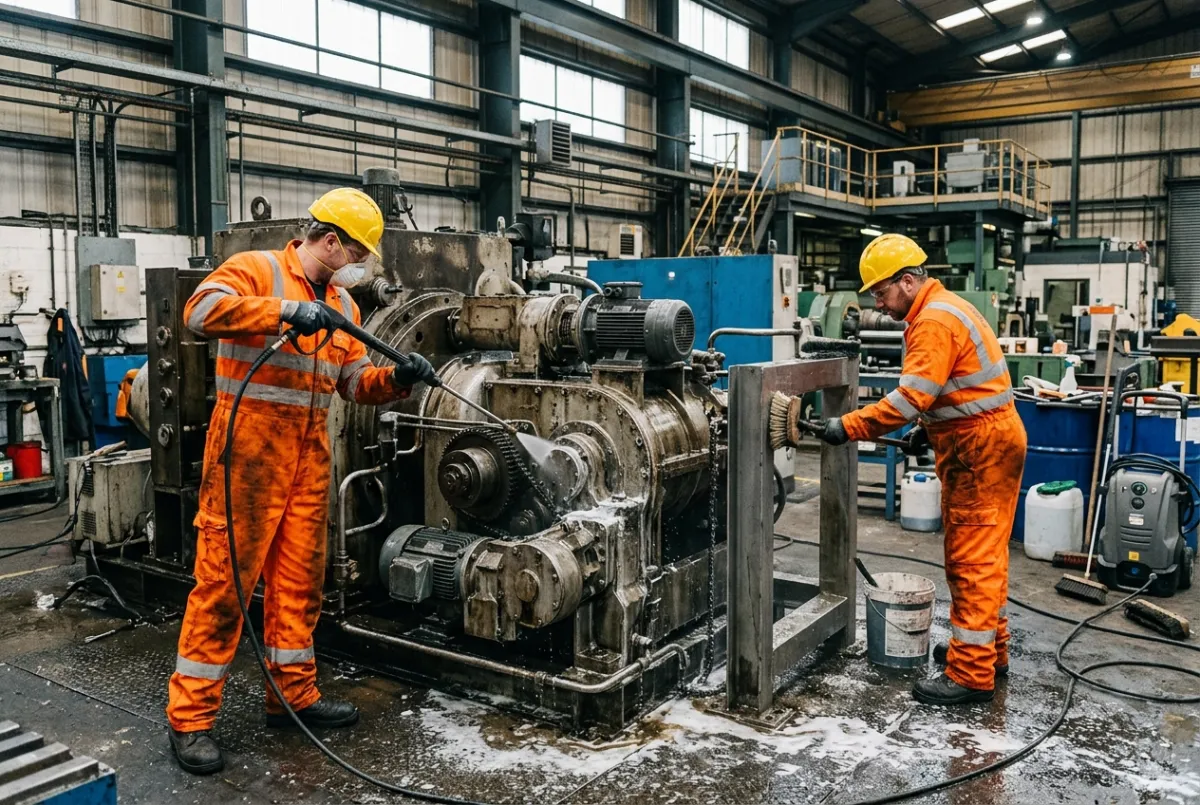
In Manchester engineering, manufacturing and processing environments, oil mist, dust and process residue can build up on frames, guarding, supports and access points long before the impact is obvious from a distance. Sites usually bring in specialist plant cleaning when residue is obscuring defects, slowing engineers down or undermining hygiene, reliability and safe access around equipment. In live operational environments, that usually means minor cleaning issues become bigger production, presentation or maintenance problems if they are left to drift.
What a realistic project usually includes
A typical scope may include equipment exteriors, guarding, access points, conveyors, supports, nearby surfaces and contamination removal that helps expose the true condition of the asset. The strongest scopes also define what will be protected, what finish is expected at handover and which areas need to be prioritised first to support site operations.
| Work option | Best fit | Typical duration | Expected outcome |
|---|---|---|---|
| Single-asset clean | One priority machine or asset | 1 day | Fast access and visibility improvement |
| Multi-machine programme | Several linked assets | 1-2 days | Good for planned maintenance windows |
| Shutdown-led machine clean | Broader plant or process area | 2-4 days | Best for thorough inspection readiness |
Costs, timings and what changes the budget
Smaller machine-focused cleans in Greater Manchester often start around £1,500 to £3,500, while wider programmes covering several assets or downtime windows commonly range from £4,000 to £8,000. One asset or one process area may be completed in a day, while broader machinery cleaning projects usually take two to four days once isolation, cooling periods and handover checks are included. These are realistic planning ranges rather than fixed quotations, but they reflect the labour, access and coordination issues commonly seen across Manchester and Greater Manchester industrial environments.
A practical programme should also reflect COSHH guidance so the work is managed safely around contamination risks, surrounding activities, plant condition and the site’s own operating procedures.
What to confirm before work starts
Effective planning covers lock-off, cool-down requirements, cleaning method, substrate sensitivity, contamination type, adjacent equipment protection and the standard required before restart or inspection. Clear pre-start decisions usually reduce wasted labour, avoid duplicated access costs and make the handover standard easier for the client to measure.
Local factors that affect delivery
In Manchester, delivery plans are often influenced by Trafford Park traffic patterns, tight loading schedules, shared industrial estates, older building fabric and the need to coordinate around engineering, warehousing or processing activity without creating unnecessary downtime. Alternative Cleaning Solutions (NW) Ltd typically surveys access routes, drainage constraints, residue behaviour, shift patterns and waste-handling requirements so the cleaning specification matches the real site rather than a generic national template. That local detail helps clients compare costs more accurately and gives site managers a more credible timeline for live work, planned outages and phased handovers.
Where related services can improve the outcome
Even when the brief looks straightforward, better results often come from pairing the work with factory & industrial cleaning if that linked service reduces rework, shortens the total programme or improves the condition of surrounding assets. On larger sites, planning linked scopes together is often more efficient than discovering those dependencies once labour and equipment are already on site.
For procurement teams and site managers, that joined-up planning also makes it easier to compare quotations, align cleaning windows with engineering priorities and avoid the false economy of treating connected contamination issues as separate one-off jobs. In practice, Manchester projects tend to run more smoothly when access, residue removal, shutdown support and presentation standards are considered together rather than passed between multiple short-term contractors.
Frequently asked questions
Why clean machinery if it is still operating?
Because hidden contamination can still affect inspection quality, maintenance efficiency and long-term reliability before it causes a visible breakdown.
Can machinery cleaning be scheduled around production?
Yes, but the safest approach depends on isolation requirements, contamination type and how much access is needed around the asset.
What cleaning method is used on industrial machinery?
The right method depends on residue, surface type and whether the job calls for dry removal, degreasing, steam, low-moisture cleaning or a staged combination.
Request a Manchester industrial cleaning survey
If you need plant & machinery cleaning in Manchester or the surrounding Greater Manchester area, use the homepage at industrialcleaningmanchester.co.uk to request a survey-led recommendation, a realistic budget range and a programme that fits live operations, shutdown windows and long-term site standards.