Manchester Factory & Industrial Cleaning for Safer Production Areas and Lower Unplanned Downtime
Manchester Factory & Industrial Cleaning for Safer Production Areas and Lower Unplanned Downtime
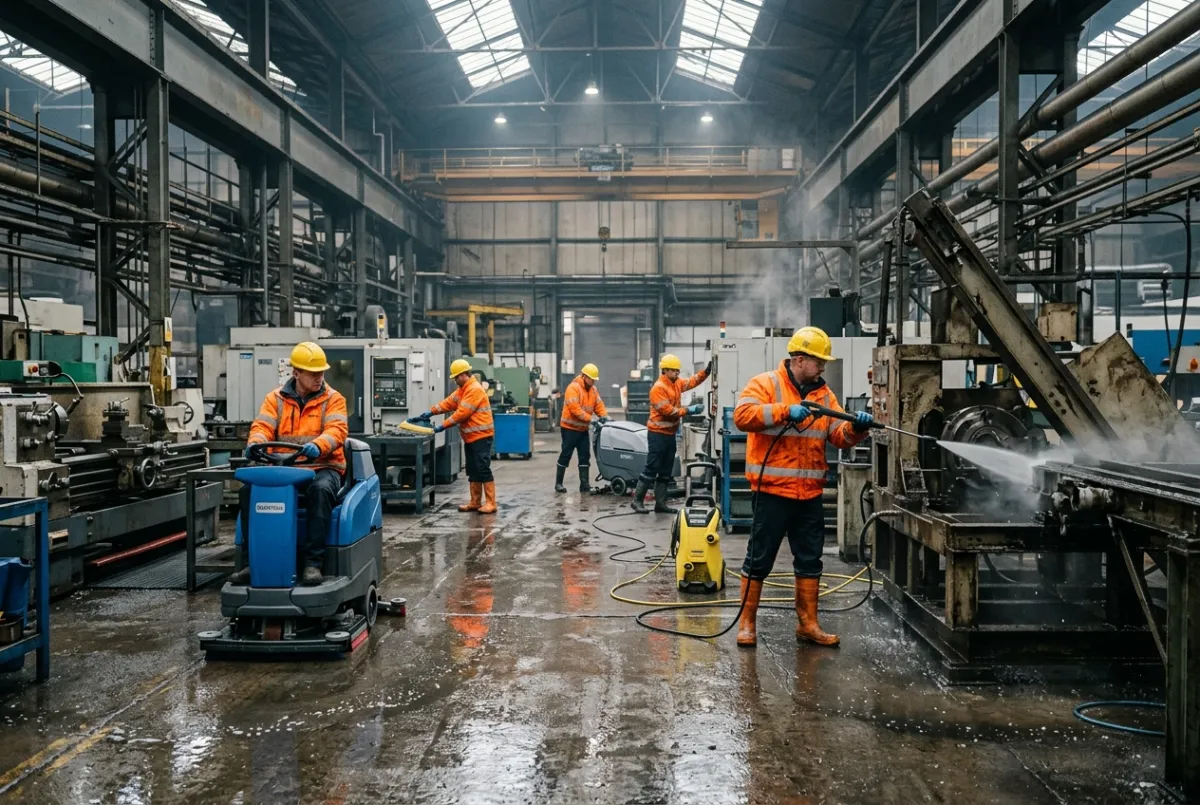
Factory floors, production lines and service corridors only stay safe when contamination is controlled before it starts to interfere with output. In busy manufacturing areas across Manchester, Trafford Park, Salford and wider Greater Manchester, factory and industrial cleaning is less about appearances and more about keeping production areas workable, inspection-ready and easier to manage around live operations. Alternative Cleaning Solutions NW Ltd positions its Manchester service around factories, warehouses, manufacturing facilities and commercial industrial premises, with work planned around operational schedules and delivered in line with health and safety procedures and safe working practices.
What factory and industrial cleaning normally covers
A proper industrial cleaning scope usually combines floor cleaning, removal of built-up dust and residues, cleaning around structural steel and service zones, treatment of oily or dirty work areas, and the safe cleaning of access routes used by staff, engineers and mobile equipment. On Manchester sites, the practical need is often straightforward: remove grime before it creates avoidable safety issues, slows inspections or starts to affect maintenance quality.
This kind of work is especially useful where plants operate long shifts, where contamination spreads from one process area into another, or where different departments share the same access corridors and welfare routes. It can also be the base layer for more specific services such as plant and machinery cleaning when the focus needs to move closer to equipment rather than general production areas.
Why Manchester factories benefit from planned cleaning
Manchester and Greater Manchester contain a wide mix of engineering, manufacturing, warehousing and process environments. The ACS homepage specifically references support for factories, logistics sites, manufacturing facilities and infrastructure projects, which matters because cleaning priorities are different in each setting. A food-adjacent production area, for example, will think differently about residue control than an engineering workshop or heavy plant room.
What stays consistent is the need for clear safe systems, competent delivery and cleaning that matches operating reality. Industrial cleaning that ignores access restrictions, work sequences or contractor control can create as many problems as it solves. That is why factory cleaning programmes should sit inside site-specific risk assessments, method statements and agreed attendance windows rather than being treated as an afterthought.
Typical cost ranges and timescales in Greater Manchester
ACS does not publish flat prices on the live Manchester homepage, and that is sensible because industrial environments vary too much for one-rate quoting. As a planning guide rather than a fixed ACS tariff, smaller targeted factory cleans in Manchester may start in the high hundreds of pounds where contamination is limited and access is straightforward. Wider production-area resets, out-of-hours attendance, heavy degreasing or multi-zone programmes more often move into the low thousands. Complex live environments, high-level elements or combined shutdown support can increase budgets further.
Timeframes are also scope-led. A contained clean to a single process zone might fit into one shift. A broader factory clean covering floors, walls, service routes and contamination hotspots can take one to three days. Where multiple departments remain live, phased working is usually more efficient than trying to clean the whole building in one pass.
| Cleaning format | Best fit | Typical timing | Main benefit |
|---|---|---|---|
| Single production-area reset | One priority zone with visible contamination | One shift or one visit | Fast safety and housekeeping improvement |
| Multi-zone factory clean | Larger sites with shared routes and mixed processes | 1-3 days | Better consistency across the site |
| Out-of-hours industrial cleaning | Sites that cannot pause daytime production | Evenings or weekends | Lower disruption to output |
| Planned turnaround support | Sites preparing for inspection, maintenance or handover | Built around access window | Cleaner restart conditions and fewer delays |
How a better factory cleaning plan is structured
Start with contamination routes, not just dirty surfaces
The best industrial cleaning plans map where dust, grease, packaging debris, process residues and tracked contamination actually move through the building. When managers understand how dirt travels, they can decide which routes need daily control, which zones need periodic deep cleaning and which areas should be bundled into factory shutdown cleaning because the work is too intrusive for normal running hours.
Match the method to the live environment
Manchester industrial sites often need a contractor that can work around production schedules, loading activity and maintenance windows. The ACS homepage says projects can be planned around operational schedules to minimise disruption, which is important for facilities that cannot afford avoidable stoppages. In practice, that means agreeing isolation boundaries, chemical suitability, waste handling and handover expectations before the team arrives on site.
Build cleaning into operational control
The biggest savings usually come when cleaning is part of routine site control rather than a reactive fix. Cleaner environments make leaks easier to spot, make inspections more reliable and reduce the amount of time supervisors spend dealing with preventable housekeeping issues. Over a year, that tends to support both compliance and uptime.
Signs a Manchester factory needs more than routine housekeeping
If floor contamination is returning quickly, if access routes are getting slippery, if dust is settling on ledges and structures above production, or if engineering teams keep losing time clearing work areas before maintenance starts, the site has probably moved beyond basic janitorial support. That is normally the point where a structured industrial cleaning programme produces better value than repeated small reactive visits.
It is also the right moment to look at how general factory cleaning connects to specialist services. Many sites benefit from combining a broad production-area clean with equipment-focused work, deeper degreasing or a planned shutdown scope so that the whole environment is reset in a controlled way rather than piece by piece.
FAQ
What does factory and industrial cleaning usually include?
It commonly includes floors, access routes, work zones, structural surfaces, contamination hotspots and other operational areas that need a safer, cleaner standard than ordinary commercial cleaning can provide.
Can factory cleaning be completed outside normal production hours?
Yes. The Manchester ACS homepage says projects can be planned around operational schedules, shutdown periods and maintenance windows to minimise disruption to production activities.
How much does industrial cleaning in Manchester usually cost?
Smaller targeted projects may begin in the high hundreds, while larger multi-zone cleans, deep cleans or live operational works can move into the low thousands depending on scope, access and contamination levels.
When should a site move from routine cleaning to a deeper industrial clean?
Usually when contamination starts to affect safety, maintenance access, inspection quality or overall site presentation more often than routine housekeeping can reasonably control.
CTA
If your site needs cleaner production areas, safer working routes and a practical plan built around live operations, request a quote from Alternative Cleaning Solutions NW Ltd.
