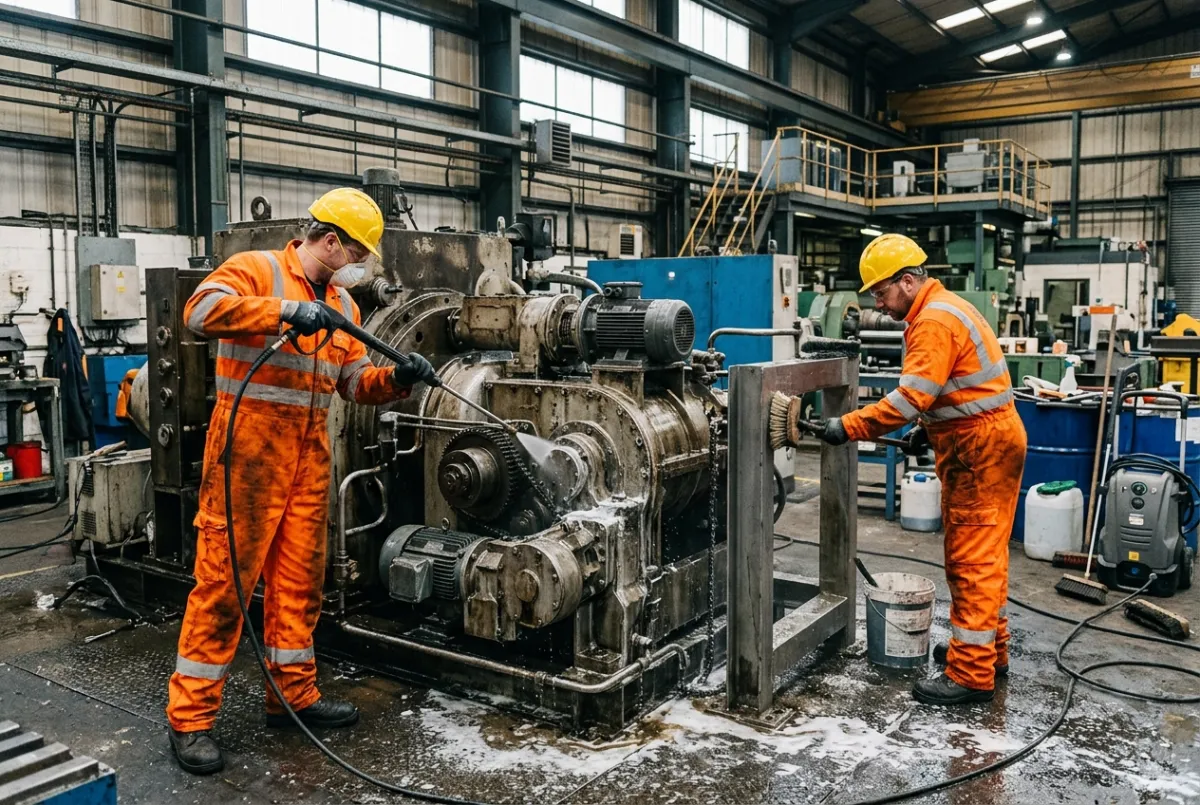
Manchester Plant & Machinery Cleaning for Better Reliability and Safer Maintenance Windows
Manchester Plant & Machinery Cleaning for Better Reliability and Safer Maintenance Windows
Plant performance is easier to protect when equipment is kept clean enough for maintenance teams to see problems early. In manufacturing and engineering environments across Manchester and Greater Manchester, residue on machines does more than look untidy. It can hide leaks, trap heat, affect access around guards and service points, and make routine maintenance slower than it should be. That is why plant and machinery cleaning should be treated as part of asset care rather than a cosmetic extra.
Alternative Cleaning Solutions NW Ltd states on its Manchester homepage that specialist machinery and equipment cleaning is available for manufacturing plants, engineering environments and operational production areas. That local fit matters because equipment cleaning needs to reflect what is being processed, how often downtime is available and whether teams are working around live production or inside a planned window.
What plant and machinery cleaning is designed to improve
A strong scope normally focuses on the accessible surfaces of machines, surrounding floors, supports, service routes and adjacent structures where debris, oils, dust and residues collect over time. In some plants the goal is improved housekeeping. In others it is better maintenance access, a safer work zone for engineers or a cleaner handover before inspection.
This service often works best when it is connected to wider site strategy. If whole production areas are falling below standard, the first step may be broader factory and industrial cleaning. If the site is already scheduling downtime, the machinery clean may be folded into a larger turnaround so that access, labour and isolation controls are managed once rather than repeatedly.
Why Manchester engineering and manufacturing sites schedule this work
Manchester facilities frequently operate with limited maintenance windows. The live homepage specifically notes that industrial cleaning can be planned around operational schedules, shutdown periods and maintenance windows, which is important for plants that cannot release core equipment during normal output. When cleaning is timed well, it helps engineers reach service points faster and gives operations teams a more reliable view of equipment condition.
There is also a health and safety reason to plan it properly. HSE explains that maintenance of plant and equipment should sit inside a planned maintenance programme, with safe isolation, competent delivery and clear systems of work. Cleaning around machinery should follow the same logic because contractors are often working close to equipment, utilities, slippery residues and tight access areas.
Typical cost ranges and likely timing
ACS does not publish fixed rates, so projects should be quoted by scope. For budgeting purposes, smaller plant cleaning jobs in Manchester may start from the upper hundreds where one or two machines need attention and the contamination level is manageable. More involved machinery cleaning, especially where several assets, guarding, high-level pipework or out-of-hours working are involved, can quickly move into the low thousands.
A focused equipment clean may fit into a single shift or maintenance window. A wider plant-area programme can take one to two days, and shutdown-linked cleaning can run longer depending on sequencing, safe isolation and how much surrounding area also needs attention.
| Cleaning scope | Typical use case | Indicative timing | Practical outcome |
|---|---|---|---|
| Single machine clean | One asset with visible build-up or hygiene concerns | Part of one shift | Better inspection visibility |
| Plant-area reset | Several machines in one production zone | 1 day | Cleaner maintenance access |
| Maintenance-window clean | Assets being serviced by engineers | One planned window | Faster and safer work preparation |
| Shutdown-integrated clean | Broader plant and adjacent structures | 1-3 days | More complete restart conditions |
How to get better value from machinery cleaning
Prioritise the assets that affect uptime most
Not every machine needs the same cleaning frequency. High-output or contamination-prone assets usually deserve priority because any hidden fault or restricted access around them has a larger effect on production. Managers who rank equipment by downtime risk generally get better value from cleaning budgets.
Make the clean useful for the next task
The most effective programmes do not stop at making the asset look better. They prepare it for the next meaningful step, whether that is maintenance, inspection, engineering work or a larger shutdown sequence. That is why plant cleaning often links naturally into factory shutdown cleaning when sites are trying to combine multiple tasks into one controlled access window.
Use local scheduling knowledge
ACS states that it operates across Manchester, Trafford Park, Salford, Stockport, Bolton and surrounding industrial areas. For clients, that matters because a contractor familiar with Greater Manchester industrial travel patterns and access expectations is better placed to turn up when the site can actually release the work area, not when it is most convenient for the contractor.
Common signs your plant needs a deeper clean
Repeated oily deposits around service points, poor visibility during inspections, residue beneath equipment, persistent grime on housings or guards, and maintenance teams spending time clearing work areas before they can start are all signs that a deeper clean is overdue. When those issues repeat, periodic machinery cleaning is usually cheaper than repeated delays and short-notice disruption.
FAQ
What does plant and machinery cleaning usually include?
It usually includes machine exteriors, accessible structural elements, surrounding floors, service areas and residue-prone zones that affect maintenance access and day-to-day housekeeping.
Can machinery cleaning be completed during live operations?
Sometimes, yes, but only where the site can segregate the work safely and the cleaning method fits the live environment. Many projects are better planned inside maintenance windows.
How much should a Manchester site budget for machinery cleaning?
Smaller focused jobs may begin in the upper hundreds, while wider multi-asset or shutdown-linked projects can move into the low thousands depending on contamination, access and timing.
Why not leave cleaning to the maintenance team?
Because specialist cleaning support can free engineers to focus on faults, servicing and repair work rather than spending valuable time clearing residues and work areas first.
CTA
If your plant needs cleaner equipment, clearer maintenance access and a practical scope built around production reality, request a quote from Alternative Cleaning Solutions NW Ltd.
