Manchester Industrial Degreasing & Deep Cleaning for Cleaner Equipment and Safer Process Areas
Manchester Industrial Degreasing & Deep Cleaning for Cleaner Equipment and Safer Process Areas
Grease, oily residues and process contamination do not just make a site look dirty. They can affect housekeeping standards, slow maintenance, create slip risks and make it harder for teams to inspect equipment properly. Across Manchester and Greater Manchester, industrial degreasing and deep cleaning is used when normal surface cleaning is no longer enough and process areas need a more thorough reset. On engineering, manufacturing and heavy-use industrial sites, that reset often supports safer operations as much as it improves cleanliness.
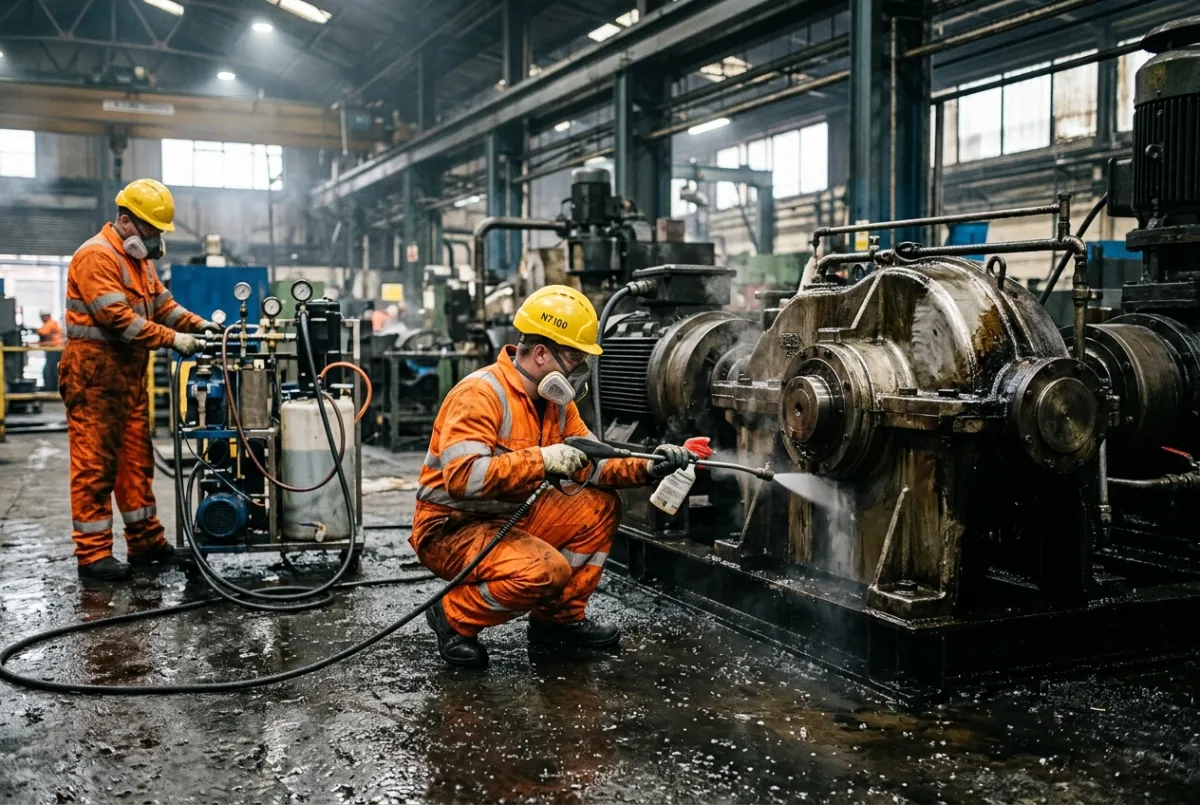
Alternative Cleaning Solutions NW Ltd says on the Manchester homepage that industrial deep cleaning may include machinery cleaning, industrial degreasing, floor cleaning, high-level cleaning, cladding cleaning and removal of industrial contaminants. That makes degreasing and deep cleaning one of the most useful support services on sites where residue returns quickly and ordinary cleaning simply skims over the real problem.
What industrial degreasing and deep cleaning usually involves
This type of work is normally focused on process areas, machinery surroundings, oily floors, hard-to-clean structural zones, contamination-prone production spaces and other surfaces where grease or residue has built up over time. The goal is to remove contamination methodically enough that the next operational task becomes easier, whether that is inspection, maintenance, quality control or a wider hygiene reset.
The service often overlaps with confined space cleaning where contamination sits inside restricted-access chambers, pits or enclosed service zones. On more open production sites, it can also work alongside wider facade or structural cleaning if grease and airborne residues are reaching the surrounding building fabric.
Why Manchester sites use degreasing as a planned service
Many industrial managers treat degreasing as something to request only when conditions are already poor. In practice, that approach can make the job larger and more expensive than necessary. Once oils and residues are allowed to harden or spread, they take more labour, more products and more downtime to remove.
There is also a compliance angle. HSE’s COSHH guidance is directly relevant whenever a process involves substances hazardous to health, cleaning chemicals or contamination that needs to be assessed and controlled properly. For Manchester clients, that means degreasing projects should be planned with chemical suitability, ventilation, waste handling and worker exposure in mind rather than being treated as an improvised washdown.
Typical budgets and timings
ACS does not publish fixed Manchester prices, so each project should be quoted by scope. As a broad planning guide, smaller deep-cleaning and degreasing works may start in the upper hundreds where the target area is limited and access is easy. Larger plant environments, heavier contamination, out-of-hours attendance or multiple process zones often move into the low thousands.
Timeframes vary according to how much grease has built up, whether machinery can be isolated, and how many surfaces are included beyond the obvious floor area. Some focused degreasing tasks fit into one maintenance window. Broader process-area deep cleans can take one to three days if several zones, surfaces or safety controls are involved.
| Degreasing format | Best fit | Typical timing | Main benefit |
|---|---|---|---|
| Targeted process-area degrease | One contamination hotspot | One shift | Faster local improvement |
| Multi-zone deep clean | Several oily or residue-heavy areas | 1-2 days | Better whole-area reset |
| Maintenance-linked degreasing | Areas due for engineering work | Planned access window | Cleaner servicing conditions |
| Periodic contamination control | Sites with recurring grease build-up | Scheduled attendance | Lower long-term residue load |
How to make deep cleaning more effective
Identify the contamination pattern first
Before a deep clean starts, managers should map where grease is being generated, how it travels and where it settles. That prevents the team from spending most of the budget on the visible floor while leaving the actual source untouched.
Link degreasing to the wider cleaning strategy
On many sites, degreasing delivers most value when it is paired with adjacent support tasks. For example, greasy overhead services may justify linked access work, while dirty external openings or splash zones may make commercial exterior cleaning relevant at the same time. Combining those decisions early usually reduces repeat mobilisation and gives the site a more complete reset.
Use comparable North West standards
Operators looking at housekeeping improvement can also learn from broader factory and industrial cleaning approaches used on similar North West facilities, particularly where contamination control, phased attendance and maintenance support need to work together rather than as disconnected tasks.
When a site needs deeper intervention
If residue is returning quickly after routine cleans, if oily deposits are affecting access routes, if machines and surrounding structures are hard to inspect, or if internal teams keep having to pre-clean before engineers can start, the site probably needs a true degreasing scope rather than another light clean. Acting earlier is usually cheaper than waiting for heavy contamination to harden and spread.
FAQ
What is the difference between routine industrial cleaning and deep degreasing?
Routine cleaning manages day-to-day dirt, while degreasing and deep cleaning is used when oily residues, built-up contamination or more stubborn process deposits need a more thorough reset.
What affects degreasing costs in Manchester?
The main factors are contamination severity, area size, machinery access, chemical suitability, waste handling, working hours and how much surrounding structure also needs treatment.
Can degreasing be scheduled around live operations?
Sometimes, yes, but many projects work best inside maintenance windows where access, chemical controls and isolation can be managed more effectively.
Why is COSHH relevant to deep cleaning?
Because degreasing can involve substances or residues that need proper assessment, control measures and safe handling arrangements before work begins.
CTA
If your process areas need a more thorough contamination reset, request a quote from Alternative Cleaning Solutions NW Ltd for industrial degreasing and deep cleaning in Manchester and Greater Manchester.
